How to care for your new Bonsai Tree
There’s something special about a bonsai tree. It’s not just a plant; it’s a living sculpture and a dialogue between you and nature that unfolds slowly over time. Contrary to popular belief, caring for a bonsai does not need to be hard or time-consuming.
THIS ARTICLE IN A NUTSHELL
- A variety of trees, shrubs, and succulents can be trained to become bonsai.
- Caring for your bonisa does not need to be hard or time-consuming.
- Water regularly. Keep the soil damp.
- Your bonisa can live outside or indoors.
- Place in a sunny spot or one with good indirect light.
- Decide on the shape and size you want.
- Prune your tree regularly.
- Fertilize occasionally in Spring and Summer.
- Re-pot or change the soil every few years.
- The growing of bonsai trees is an ancient art form.
Below you'll find a simple guide to caring for your new Bonsia.

Little Tree Studio Ceramic House Planter & Tealight Holder with a 'starter' bonsia tree (Hebe Wiri Image) 'Hebe hybrid 'a long flowering small evergreen shrub that can be Bonsai'd. The plant shows off narrow green leaves with lilac flower spikes.
Choosing the Right Tree
In a nutshell: A variety of trees, shrubs, and succulents can be trained to become bonsai.
You can bonsai many types of trees, shrubs, and succulents. Australia’s climate is wonderfully suited to a range of traditional bonsai varieties — for beginners, hardy species like juniper, fig (ficus), and Chinese elm are ideal. They’re forgiving, adaptable to our changing seasons, and tolerant of our sometimes forgetful watering routines. If you live somewhere cooler, you might also try Japanese maple, though it prefers protection from harsh summer heat.
The Art of Watering
In a nutshell: Keep your Bonsai damp but not soggy for extended periods. Water every day in summe and a few times a week in winter.
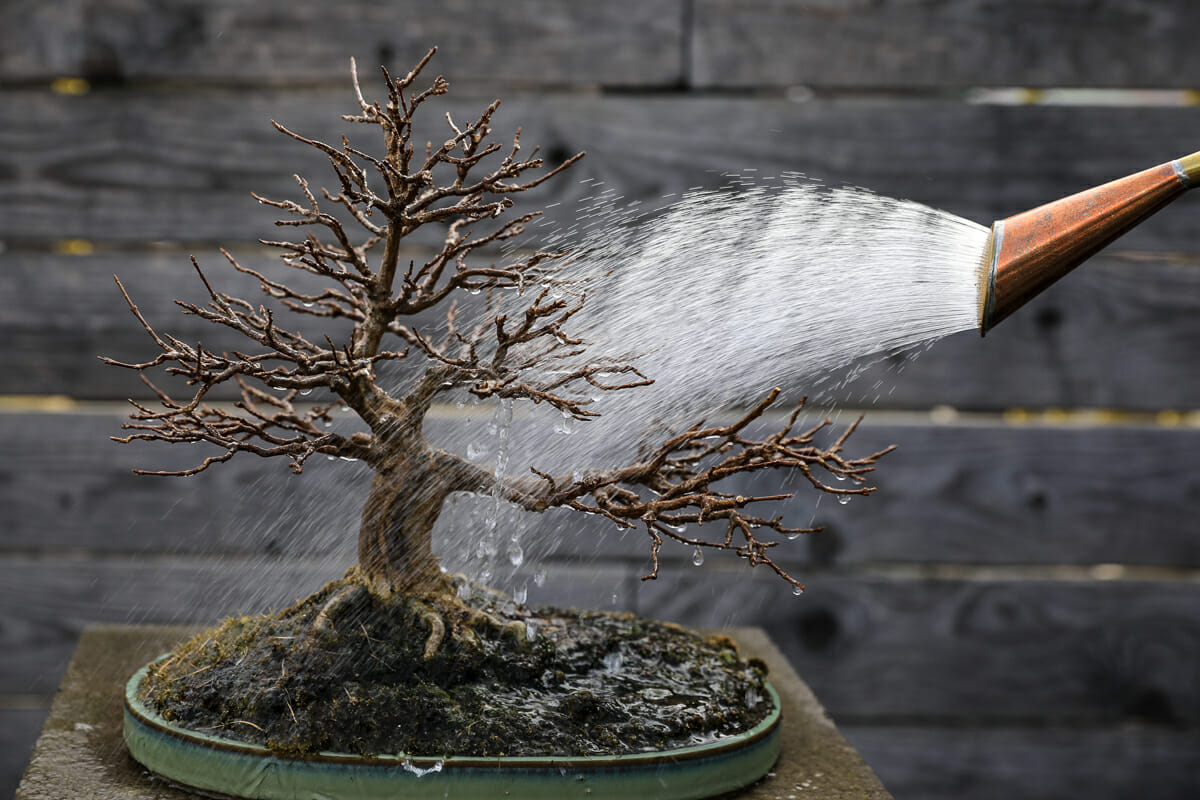
Because bonsai trees are grown in small pots, they can dry out quickly and most Bonsia Trees — with the exception of succuents — prefer a damp soil and thorough watering.
The best time to water is when the soil just begins to dry out. In summer, that means daily and in winter, every few days. Keep your eye on the soil’s moisture and texture. It should feel damp.
Using a fine nozzle watering can lets you control the flow and protect delicate branches. In summer, soaking your bonsai in a bucket or the sink filled with water for a minute or two will help give your plant a nice, thorough watering. A misting bottle can also work well and help keep your leaves from gathering dust if you keep your tree indoors.
Light & Placement
In a nutshell: Keep your Bonsia in a bright sunny or part shady spot with indirect light.
Outdoors is usually best for most traditional bonsai, especially sun-hungry species like juniper or pines. If you want, however, you can rotate them from inside to outside or find a super sunny spot in your house. For outdoor trees, an ideal placement is where it receives morning sun and dappled afternoon light — an east-facing veranda is perfect for many Australian homes.
Indoor bonsai prefer bright indirect or a sunny position with good airflow. Always avoid placing them near heating vents or air-conditioning, which can dry them out faster than you expect.

Photo above: A Informal natural looking bonsai
Pruning & Shaping
In a nutshell: Trim your Bonsai regularly to keep it small and compact. The size it grows to will also depend on the pot size.
Here’s where bonsai becomes truly artful. Pruning isn’t about perfection; it’s about your vision for the tree. You can choose an easy, informal method or a more nuanced method. The most important thing to remember is that no matter what you decide, keep your bonsai pruned when it reaches the size and shape you want.
EASY METHOD. INFORMAL LOOK.
You can choose an informal look, which is great for beginners. This simple method means simply cutting your branches back to keep your bonsai small and letting the tree do as it will.
NUANCED METHOD. FORMAL LOOK.
A formal look, which is more time-intensive, may include trimming back new growth in a more nuanced way to maintain the tree’s balanced form and wiring branches to create a structured or particular look. Instagram and YouTube have heaps of videos on how to wire and formally trim Bonsai trees.
The formal method of caring for a bonsai is an opportunity that can be so much more than just cultivating greenery. Caring for a bonsai this way is a call to mindfulness and being present. It asks you to slow down, observe and gently participate in the rhythm of growth, something that feels increasingly precious in a world that rarely pauses.
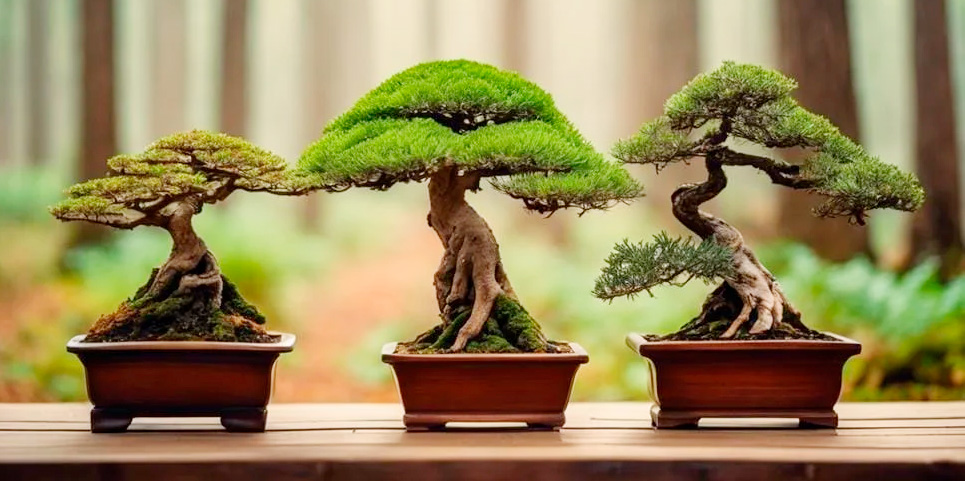
Formally pruned and shaped bonsai
Feeding and Soil Care
In a nutshell: Re-pot or change the soil every few years and fertilise occassionally.
During spring through early autumn, feed your tree once a month with a balanced liquid fertiliser. During the colder months, stop feeding as growth slows or if the tree becomes dormant for the winter.
Repot your tree every two to three years in a free-draining bonsai mix to refresh nutrients. You'll also need to trim back the roots before replanting to prevent your tree from becoming root-bound.
The Mindful Connection
Caring for bonsai can create a place of calm as it encourages grounding, patience and the acceptance of slow progress. Many people, myself included, are drawn to bonsai for this very reason: the interplay of form, intention and natural imperfection. Each tiny tree becomes a reflection of your own creative journey — something never finished, alwaysunfolding.
So, whether it sits on your apartment balcony or your windowsill or in the garden, tending a bonsai can bring a quiet sense of balance to everyday life. In the practice of shaping miniature trees, we’re also shaping your inner self.
A BONSIA HISTORY LESSION
Though many of us think of bonsai as distinctly Japanese, its story actually begins much earlier in ancient China, where “penjing” (tray scenery) first appeared around 700 AD. Buddhist monks later brought this meditative practice to Japan, where it evolved into bonsai as we know it — a miniature reflection of the natural world that embodies harmony, patience, and respect for life’s impermanence.
Today, caring for a bonsai in your home isn’t only about cultivating greenery; it’s an art of mindfulness. It asks you to slow down, observe and gently participate in the rhythm of growth — something that feels increasingly precious in a world that rarely pauses.